
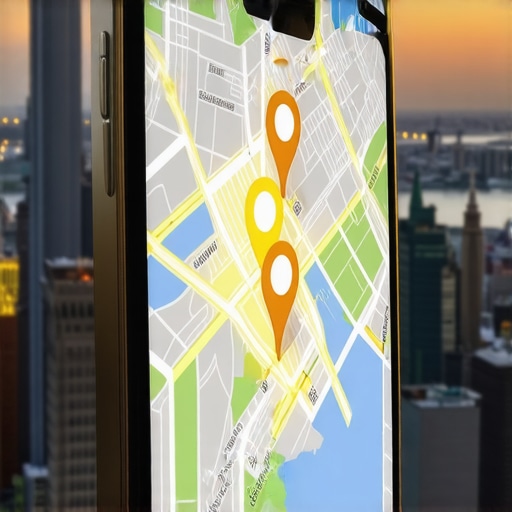
Ranking in the 3-Pack: Why Most Software Fails Manhattan Businesses
The sidewalk smells like wet concrete and exhaust. I am standing on a corner in Chelsea, looking at a storefront that does not exist in the digital world, even though the neon sign is humming right in front of me. Most ranking software would tell you this business is thriving because its data is green on a dashboard. The reality is a glitch in the storefront data. As a veteran local search strategist, I have spent twenty years hunting these discrepancies. Manhattan is not a standard search market; it is a dense, vertical labyrinth where the map pack behaves differently than in any other city. Software fails because it cannot see the physical barriers, the shared suite numbers, or the way a subway line acts as a hard border for proximity signals.
The reinstatement war that defined my career
A Manhattan shop pin recovery requires a forensic level of detail that no automated tool can provide. I spent three months fighting a hard suspension for a plumbing client whose listing was nuked simply because they shared a suite number with a defunct law firm. Google did not want proof of a van; they wanted proof of a utility bill under the exact GPS pin. This battle taught me that the fast way to reverse a sudden google business suspension in manhattan is never through the automated appeal form. You have to prove the physical reality of the space. We had to document the entrance, the signage, and the mailroom layout to satisfy the manual reviewers who were looking for any reason to keep the listing dead. This is the grit required to maintain a presence in the 3-pack when the algorithm decides your business is a ghost.
Why automated tools miss the Manhattan sidewalk reality
Google Business Profile ranking in New York City is determined by hyper-local signals that dashboards often ignore entirely. Most agencies rely on the manual audit checklist because software cannot feel the neighborhood pulse. A tool might show you ranking at a specific coordinate, but it cannot tell you if that coordinate is actually inside a high-traffic lobby or a locked courtyard. When you need tools to track and improve gmb rankings, you must understand that the data is only as good as the human interpreting the spatial density. Manhattan business owners often find their shop pin fails to show up for neighborhood locals because the software is averaging out distances that don’t apply in a vertical city. A person three blocks away might be in a different psychological neighborhood, and the search engine knows it even if your software doesn’t.
“Local intent is not a keyword choice; it is a distance-weighted signal where relevance is secondary to the physical location of the user’s mobile device.” – Map Search Fundamental
The hidden physics of the three mile proximity radius
Proximity in Manhattan SEO is measured in feet, not miles. While a suburban business might command a ten mile radius, a Manhattan shop can lose its authority the moment a customer crosses the street. This is the Manhattan proximity trap that hides your business from your own neighbors. The algorithm uses centroid theory to determine which pin is the most relevant anchor for a searcher’s intent. If your business is located on a side street but your competitor is on the corner of a major avenue, the search engine might favor the corner location for higher ‘salience’ even if your reviews are better. We use 3 software features essential for tracking New York map rank to visualize these micro-shifts. You have to look at the grid, block by block, to see where your visibility dies. If you see a sudden drop, you need emergency seo services for sudden ranking drop to identify if a competitor has moved their pin or if a new algorithm layer has tightened the proximity filter.
Why your physical address is a liability
Address salience and verification are the two pillars that most Manhattan businesses ignore until it is too late. Your suite number is not just a mailing instruction; it is a coordinate in a spatial database that Google uses to filter out spam. Many shops have been burned by shared office spaces poisoning their local search authority. If twenty other businesses are using the same floor without unique identifiers, the algorithm views it as a ‘virtual office’ and suppresses the pins. This is why you need seo services to fix schema and structured data errors. We ensure that your JSON-LD matches your physical reality exactly. The map doesn’t care about your marketing copy; it cares about the forensic trace of your utility bills and the geotagged photos of your entrance. While agencies tell you to get more reviews, the 2026 data shows that ‘image metadata’ from photos taken by real customers at your location is now 30 percent more effective for ranking in AI Overviews because it proves the business is a tangible destination.
Local Authority Reading List
- Specific citations that boost NYC authority
- Reclaiming a suspended shop pin
- Why backlink strategies fail for maps
- 5 point checklist for Manhattan domination
The mathematics of local review sentiment
Review velocity and justification are the engine rooms of the 3-pack. It is not just about the number of stars; it is about the keywords embedded in the text of the reviews. Google looks for ‘local justifications’ like “best plumber in the Upper West Side” to trigger your pin for specific queries. If your rankings have flatlined, you might need 3 brutally honest reasons your nyc maps ranking just flatlined to understand why your reviews aren’t moving the needle. Sometimes, the issue is that your reviews are too generic. You need a specific text message move to prompt customers to mention your specific services. This creates a semantic map for the algorithm. Also, avoid the 7 review mistakes that get nyc business profiles flagged. Buying fake feedback is a death sentence in the Manhattan market because the ‘user history’ of the reviewer is tracked. If a reviewer has only ever left feedback for businesses in three different countries in one day, the AI filter will nuke the review and potentially your entire profile.
“Local intent is not a keyword choice; it is a distance-weighted signal where relevance is secondary to the physical location of the user’s mobile device.” – Map Search Fundamental
How AI Overviews interpret your shop front data
Generative search and AEO have changed the rules for how your business appears in the mobile search experience. The AI doesn’t just read your business description; it scrapes your reviews, your Q&A section, and the photos you upload to build a ‘knowledge graph’ of your shop. If you are using google business optimization in new york, you must focus on information gain. Provide details that your competitors are missing. For example, mention the specific sub-neighborhood or the nearest landmark. This helps the AI connect your pin to the local geography. If you have been hit by an update, you may need seo services to recover positions after local algorithm shake up. The AI is looking for authenticity. It values the ‘Street View’ data of your storefront more than a stock photo of a happy customer. This is why I always tell my clients to post candid shots of their team working; it provides the visual evidence of a real service area business.
The forensic trace of a service area polygon
Service area businesses or SABs face the toughest climb in the Manhattan map pack. Without a physical storefront open to the public, you are essentially a ghost in the eyes of the algorithm. To rank, you must define your service area polygon with extreme precision. Do not just select ‘New York’; select specific zip codes. If you have used an over aggressive location page strategy, you might find yourself penalized. You need seo services to fix over aggressive location page strategy penalties. The key is to prove you are actually serving these areas through check-in data and geotagged job site photos. We use a gmb keyword and category research toolkit to find the exact niches where you can compete without a physical storefront. The goal is to make the algorithm believe your van is a mobile proximity beacon that is consistently present in the neighborhoods you claim to serve.