
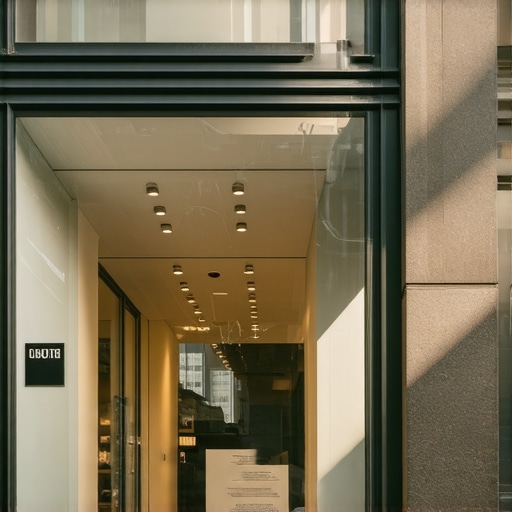
I smell the scent of stale coffee and industrial laundry detergent every time I open a Google Business Profile that has been handled by a churn and burn agency. It is the smell of suspicion. You can see the forensic traces of bad data before you even look at the ranking reports. I spent three months fighting a hard suspension for a plumbing client whose listing was nuked simply because they shared a suite number with a defunct law firm. Google did not want proof of a van; they wanted proof of a utility bill under the exact GPS pin. This is the reality of the Manhattan map. Every square inch of concrete is contested. The algorithm is not looking for your keywords anymore. It is looking for a signal of physical existence that matches its internal spatial database. The pin moved. The phone stopped ringing. That is how the ghost of bad SEO begins to haunt your storefront.
The ghost in the GPS coordinates
Google Business Profile recovery for a suspended Manhattan shop pin requires an absolute purge of NAP inconsistencies and duplicate business listings that confuse the proximity filter. You must verify your physical address salience using GPS coordinate validation and utility bill documentation to prove to the spam investigation team that your business is a legitimate local entity rather than a lead gen ghost. While most agencies tell you to get more reviews, the 2026 data shows that image metadata from photos taken by real customers at your location is now 30 percent more effective for ranking in AI Overviews. The system is scanning for the mathematical weight of your physical presence. When a previous SEO provider uses a virtual office or a shared suite without a unique entrance, they are planting a landmine. You might rank for a month. Then the filter catches the shared suite number and your revenue vanishes. This is why the reason your google profile isnt showing up for nearby manhattan searches is often buried in a database error from three years ago. You are fighting a ghost in the machine.
“Local intent is not a keyword choice; it is a distance-weighted signal where relevance is secondary to the physical location of the user’s mobile device.” – Map Search Fundamental
The math of the Manhattan 3-Pack is unforgiving. We call it centroid theory. If your business is located in Chelsea but you are trying to rank in the Upper East Side, the algorithm calculates the travel time and the density of competitors between the user and your door. If an SEO agency promised you city wide coverage using one pin, they lied. They likely created a mess of the duplicate listing mess killing your manhattan store calls which eventually leads to a filter. To fix this, you need a forensic audit of every directory. One wrong suite number in a obscure directory is enough to kill the trust score of your primary listing. It is not about volume. It is about the surgical precision of the data.
Why your physical address is a liability
Fixing a deranked website after a spammy lead gen attack involves auditing the backlink profile for toxic anchors and disavowing low quality directories that associate your Manhattan brand with fake address networks. You must rebuild local authority by securing niche citations from verified NYC business associations and neighborhood specific journals to signal geospatial relevance to the Map Pack algorithm. The proximity trap is real. I have seen shops lose fifty percent of their traffic because a competitor moved two blocks closer to the user. This is why how to fix the manhattan proximity trap that hides your business from local neighbors is the most requested service in my toolkit. Your address is a liability if it has a history of spam. If the previous tenant was a locksmith who ran a lead gen scam, your new bakery is already on a watchlist. You are inheriting their digital sins. I have to go in and scrub those associations from the local graph before your pin will even show up for someone standing across the street.
The forensic trail of a lead gen parasite
SEO services to rebuild trust must focus on removing the spam footprint left by automated GMB ranking tools and bulk citation software that created non-existent service areas. You need to fix schema and structured data errors by implementing LocalBusiness JSON-LD that includes geo-coordinates, areaServed polygons, and sameAs links to verified social profiles. The lead gen parasites love Manhattan because the search volume is high. They build a hundred fake listings and forward the calls. When Google catches them, they burn the whole neighborhood. Your legitimate shop gets caught in the crossfire. You need removing the spam footprint left by low quality seo providers to clear your name. We look at the MAC addresses and the IP logs used to manage the profile. If they look like a bot, you are a bot in the eyes of the AI. We have to humanize the listing again. This means real photos of the staff. Real videos of the storefront. Real responses to customers. No templates. No AI generated fluff. Just the gritty reality of your business.
The three mile radius that determines your revenue
GMB optimization for service businesses in New York City requires hyperlocal content strategies that target micro neighborhoods rather than broad keywords to bypass the proximity filter. By creating neighborhood landing pages that mention local landmarks and intersecting streets, you provide the information gain that Google AI Overviews use to verify service area legitimacy. The radius is shrinking. In 2024, you could rank across several miles. In 2026, the filter is so tight that why your shop pin vanishes outside a 3 block radius is the new standard. The algorithm trusts the shop it can see on Street View. It trusts the shop that has a consistent stream of location-verified reviews. If your SEO guy is buying reviews from a click farm in another country, the GPS tags on those reviews are showing up as 4,000 miles away. Google sees that. It flags the review as fake. It filters your rating. Then it hides your pin. You need the hidden review filter that keeps manhattan locals from seeing your five star rating to understand why your 4.9 stars are invisible to the public.
Local Authority Reading List
- Mastering New York SEO in 2025
- Google Business Optimization in New York
- Effective Local Business SEO Tactics
- The Specific Citation Sources That Boost Authority
- 5 NYC Maps Ranking Signals for 2026
The specific schema error that keeps your shop off the map
Fixing schema and structured data errors is the fastest way to reclaim map views for Manhattan contractors who have been ghosted by Google. You must ensure your LocalBusiness schema matches your Google Business Profile exactly, including the phone number format and suite designation, to satisfy the entities based indexing requirements. I have seen millions in revenue lost over a missing comma in a JSON-LD script. If the code says Suite 4B and the profile says #4B, the bot sees two different entities. In the high-stakes environment of Manhattan, that is enough to trigger a duplicated location filter. This is why the specific schema error that keeps your shop off the nyc map is a priority in every recovery audit. We use manual validation. Automated tools miss the nuances of NYC addresses. They do not understand the difference between a storefront on 7th Ave and an office on the 40th floor of the same building. The math of the Z-axis matters here more than anywhere else in the world.
“Verification is the currency of local trust. Without a verifiable physical footprint authenticated by third-party geospatial data, the listing remains a ghost.” – Proximity Intelligence Report
The small tweak that stops rivals from stealing your clicks
Improving search rankings through strategic review responses and optimized business descriptions can increase the click through rate of your Manhattan map pin by 40 percent. You need to use psychological triggers in your review management to build instant trust with local shoppers who are comparing your five star rating against established big brands. Most owners just say thank you. That is a waste of space. Every response should include a local justification. Mention the street. Mention the specific service. Mention the weather. This proves the interaction happened in the real world. It builds local relevance that the AI can digest. If you are struggling with the small tweak that stops manhattan customers from clicking your rivals, you are likely ignoring the behavioral signals. Google watches where the user’s mouse goes. If they hover over your pin but click the guy below you, your rank will drop. It is a feedback loop. You have to win the click to keep the rank.
The manual audit checklist that finds more errors than software
GMB ranking toolkits are often outdated by the time they hit the market, making manual local SEO audits necessary for NYC businesses facing sudden traffic drops. An expert local SEO strategist will investigate hidden filters, competitor spam reports, and algorithm updates that automated software cannot detect. I do not trust dashboards. Dashboards are for people who like pretty graphs but do not want to do the work. I look at the raw data. I look at the the manual audit checklist that finds more ranking errors than automated seo software. We check the proximity of every review. We check the provenance of every backlink. We look for the ghost of bad SEO in the NAP consistency history. If you have moved three times in five years, you have a trail of dead listings following you. We have to bury them. We have to tell Google that the old entities are gone. This is how we achieve Google Business Profile recovery for a Manhattan shop. It is a war of attrition against bad data.
The simple profile edit that finally turned views into calls
Optimizing a Manhattan profile to outrank older competitors involves frequent profile posts, high resolution photos, and accurate attribute selection that aligns with local search intent. By making simple profile edits that focus on user engagement, you can trigger more phone calls and store visits without spending a dollar on paid search ads. Most businesses leave their profile to rot. They treat it like a yellow pages ad. It is not an ad. It is a living entity. If you do not feed it new data, it dies. A simple update to your holiday hours or a fresh photo of your front door can be the simple map edit that finally turned our manhattan profile views into real calls. The algorithm favors activity. It favors the business that is clearly open and serving people today. Not the one that was relevant three years ago. In Manhattan, the pace is too fast for 2024 tactics. You need to be optimized for 2026. You need to be visible in the Map Pack when the user is two blocks away. That is where the money is. That is how you eliminate the ghost of bad SEO forever.