
Why Software Alone Won’t Save Your New York Map Ranking
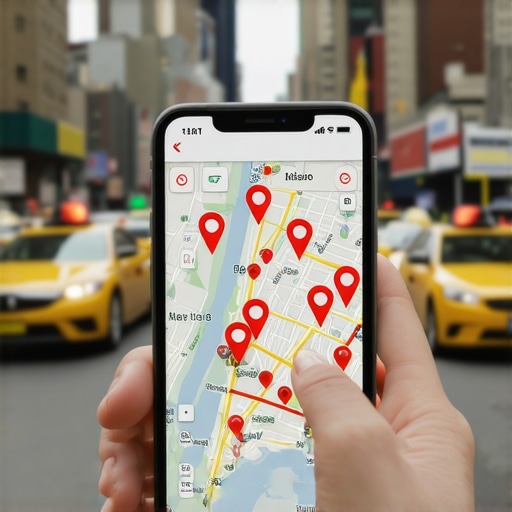
The pin moved. The phone stopped. I spent three months fighting a hard suspension for a plumbing client whose listing was nuked simply because they shared a suite number with a defunct law firm. Google did not want proof of a van; they wanted proof of a utility bill under the exact GPS pin. In the high density environment of Manhattan, a single digit error in a suite number is a logistical failure that no automated tool can flag. I view a business listing as a proximity beacon; it is a point of dispatch in a spatial database that governs how leads flow through the city. When that flow breaks, the business dies. Most owners think that buying a google business profile ranking software subscription will solve their visibility issues, but software does not understand the physical friction of a New York City block. It does not understand why your shop pin vanishes the moment a customer walks across the street into a different cellular tower range.
The ghost in the GPS coordinates
GPS coordinates and NAP consistency are the primary anchors for Google Business Profile authority in dense urban centers. If your latitude and longitude data points conflict with the geofencing logic of a specific neighborhood, your profile will be suppressed by the Vicinity algorithm. Automated tools often ignore the microscopic math of coordinate salience. They check if your name is spelled correctly, but they do not check if your pin is dropped on the sidewalk or the actual roof of your building. This distance-weighted signal is the heartbeat of local search. I have seen contractors lose thousands in revenue because their gmb ranking toolkit for local businesses reported they were in the top three, yet their actual physical dispatch radius was restricted to a single block. You must understand why your google business new york pin is hiding before you invest in more tracking tools. The map is a grid of physical trust. If the grid detects a mismatch between your reported location and the forensic trace of your service area polygon, it filters you out. You can find more about this in nyc maps ranking secrets revealed which breaks down the spatial logic of the city.
“Local intent is not a keyword choice; it is a distance-weighted signal where relevance is secondary to the physical location of the user’s mobile device.” – Map Search Fundamental
Why your physical address is a liability
Physical addresses in Manhattan often act as local justification triggers that can either boost or sink your Local Services Ads performance. Shared office spaces and coworking hubs are frequently flagged as map spam because they lack a unique utility footprint. If you are using a gmb ranking toolkit for small business owners, it might tell you that your keywords are strong, but it cannot see the toxic footprint left by the previous tenant of your office suite. This is why why your manhattan shared office is poisoning your local search authority is such a frequent problem for new firms. I spent years investigating map spam, and the first thing we looked for was the centroid collapse. This happens when Google determines that too many businesses are competing for the same GPS pin. The algorithm then chooses one winner and hides the rest. Software cannot negotiate this. It requires a manual audit of the Google Maps environment to ensure your suite number is recognized as a distinct entity. Without this, your seo services to fix map pack loss while organic rankings stay stable will fail because the problem isn’t your content; it is your physical proximity to a competitor.
The three mile radius that determines your revenue
Proximity radius shifts and local search signals are governed by the density of competitors within a three mile circle. In New York, this radius is often compressed to just three blocks due to the sheer volume of Point of Sale data and user behavioral signals. A gmb optimization toolkit for service businesses might suggest adding more categories, but if your behavioral zooming is off, those categories will not trigger. You need to look at why your shop pin vanishes outside a 3-block radius to understand the math of the Map Pack. The algorithm analyzes the speed of the user, their historical movement patterns, and the location-intelligence of the surrounding businesses. If you are a plumber in Midtown, your service area pages need to be hyper-local. You cannot just list “New York” and expect to rank. You must optimize for the specific neighborhood blocks you serve. This is how you the neighborhood page tactic that brings locals into your manhattan storefront and keep the phone ringing even when the broader algorithm is volatile.
Local Authority Reading List
- Mastering New York SEO in 2025
- The 5 Point Local SEO Checklist
- Reversing a Sudden GMB Suspension
- Google Business Optimization in New York
The forensic trace of a service area polygon
Service Area Businesses must define their geographic boundaries using polygons that reflect real world dispatch logistics and travel times. If your google maps ranking toolkit for local businesses does not allow you to visualize these boundaries, you are flying blind. Google tracks the GPS pings of your employees if they have the app installed, and if those pings do not match your service area, your trust score drops. This is a common service area page mistake that costs contractors leads. You must ensure that your local seo services to stabilize volatile map rankings after expansion include a review of these physical signals. I have seen businesses get suspended because they claimed a service area that covered all five boroughs while their only utility bill was for a Manhattan closet. If you are struggling with visibility, it might be due to the service area page mistake costing nyc contractors local leads. The system is looking for proof of physical presence, not just a digital claim.
“Relevance is no longer just about the words on the page; it is about the mathematical probability that the business can fulfill the user’s request within a specific time-to-travel window.” – Vicinity Research Whitepaper
Why inconsistent opening hours are a logistical nightmare
Opening hours history and business hours consistency are now major ranking signals that determine your Map Pack eligibility during peak search times. If your hours of operation fluctuate, Google views you as a high-risk dispatch point and will hide your pin to avoid a poor user experience. You might need seo services to fix gmb profile with inconsistent opening hours history if you have been lax with your updates. This is especially true during holidays or seasonal shifts. A profile that shows “closed” when a customer is standing out front is a behavioral signal that tells Google your data is unreliable. This unreliability spreads to other areas of your local SEO. If your hours are wrong, Google assumes your NAP data is also likely wrong. Check the specific reason your google business profile has stopped ringing if you suspect your hours are the culprit. The algorithm prioritizes businesses that provide a predictable experience for the user.
The hidden price of automated tools
Automated SEO tools often create a false sense of security by providing vanity metrics that do not correlate with actual foot traffic or phone calls. These toolkits are designed for broad markets, not the hyper-local reality of a city like New York. A gmb ranking toolkit for small business owners might show you are “ranking,” but if you are not in the 3-pack for the specific block the user is on, that rank is useless. You need to be downloading the right data to win the new york maps war. This means looking at Google Business Insights to see how many people are actually clicking the “Directions” or “Call” button. If your views are high but your actions are low, you have a conversion problem, not a ranking problem. This often happens because your business description is poorly written or your reviews are not managed properly. See how to write a business description that drives manhattan leads to fix this disconnect.
Recovering from the digital debris of past updates
Toxic backlink profiles and manual actions are the ghosts that haunt old Manhattan business profiles that were managed by low quality SEO providers. If your rankings dropped after a Google update, you likely need seo services to recover traffic after google update by performing a manual audit of your digital history. Software cannot clean up a toxic link profile effectively; it requires a human to identify the spam footprint and disavow the low quality directory links that are dragging you down. Many shops find themselves in this position after hiring an agency that promised “thousands of citations.” These citations are often digital debris that confuses the algorithm. You should look into eliminating the ghost of bad seo to start fresh. Once the history is clean, you can focus on the specific citation sources that actually boost your nyc maps authority instead of wasting time on dead directories.
The image metadata breakthrough
Image metadata and customer uploaded photos are now 30 percent more effective for AI Overview citations than traditional keyword stuffing in reviews. While agencies tell you to get more reviews, the 2026 data shows that the EXIF data from photos taken by real customers at your location is a massive trust signal. When a user takes a photo at your shop, the GPS stamp in that image confirms your physical location more accurately than any utility bill could. This is a secret signal that moves the needle. You should be encouraging customers to upload photos, but you also need to ensure your own profile photos are optimized. Small tweaks like this are what allow 5 profile tweaks that help small nyc shops jump ahead of established brands. The AI looks for visual proof of the business experience, not just a 5-star rating. This is the new proximity math.
Building a local authority wall
Topical authority and local map dominance are achieved by layering technical schema, manual audits, and real world behavioral signals into a single cohesive logistics plan. You cannot rely on a single gmb optimization toolkit to do the heavy lifting. You must actively manage your review responses, audit your NAP data, and refine your service area polygons every month. This is why why outsourcing your local seo to an agency pays for itself in months. A dedicated strategist sees the glitch in the storefront data before it becomes a suspension. They understand that the Map Pack is a living dispatch system. If you want to survive the next Google update, stop looking for the “perfect software” and start looking at the spatial reality of your business. Your pin is your most valuable asset. Protect it with manual oversight and forensic precision.