Which Google Business Insights Actually Predict More Foot Traffic to Your NYC Store
In the relentless landscape of New York City commerce, visibility is the only currency that matters. You can secure a prime lease on Broadway or a chic corner in the West Village, but in 2026, if you are invisible on a smartphone screen, you are invisible to the street. The cost of NYC real estate is astronomical, yet many business owners treat their most valuable digital asset – their Google Business Profile – as an afterthought. This neglect leads to a common, frustrating paradox: a business that looks “busy” on a dashboard but remains empty on the floor. To succeed here, you need a sophisticated approach to google business profile seo.
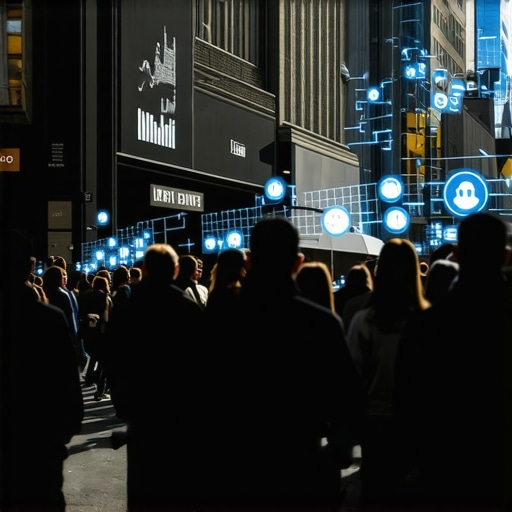
As we navigate the 2026 retail environment, the stakes have never been higher. Data from the NYC Economic Development Corporation (NYCEDC) revealed a staggering surge in activity, with over 1 million people visiting Manhattan retail hubs like Times Square, 5th Avenue, and SoHo on Black Friday in 2024 alone. However, high foot traffic in the district doesn’t automatically translate to customers in your shop. The “invisibility” problem is real; in Manhattan, a customer can be standing just one block away and never know you exist because your profile didn’t trigger in their specific search radius. Understanding which metrics actually drive people through your doors – and which are merely vanity numbers – is the difference between thriving and closing your doors. For a deeper dive into current trends, see our guide on Mastering New York SEO in 2025: Expert Strategies for Local Visibility.
The Vanity Metric Trap: Why “Views” Don’t Pay Rent
The first mistake most NYC business owners make is falling in love with “Impressions” or “Views.” In a city as densely populated as New York, these numbers are often deceptive. If your business is located near a major transit hub like Grand Central or Penn Station, your profile might rack up thousands of views simply because people are scrolling past your pin while looking for the nearest subway entrance or a public restroom. These are passive views, not active intent.
To rank google business profile listings effectively, you must distinguish between “Impressions” and “Interactions.” An impression is a glance; an interaction is a handshake. In the hyper-competitive Manhattan market, a view is a “vanity metric” that doesn’t account for the unique friction of NYC travel. Someone might see your bakery while they are on a bus going down 7th Avenue, but that doesn’t mean they are getting off to buy a croissant. Your google business profile optimization must move beyond broad visibility and focus on conversion-ready metrics that signal a consumer is actually ready to navigate the sidewalk crowds to reach you. If you’re wondering why your metrics aren’t matching your sales, read Why Your Manhattan Shop Still Isn’t Ranking Despite a Monthly SEO Bill.
We see this often with “Search Views” vs. “Map Views.” If your Map Views are high but your Direction Requests are low, it suggests that while you are appearing in the general vicinity, you aren’t providing a compelling enough reason – or clear enough location data – for a user to commit to the walk. In 2026, local SEO is about capturing the “micro-moment” of intent, not just being a dot on a digital map.
The Holy Trinity of Foot Traffic Predictors
If you want to know if your google maps ranking service is actually delivering a return on investment, you need to ignore the noise and focus on the “Holy Trinity” of local metrics: Direction Requests, Phone Calls, and Website Clicks.
1. Direction Requests: The Gold Standard
In New York City, a direction request is the single most accurate predictor of a physical visit. Unlike suburban markets where people might drive 20 minutes on a whim, an NYC pedestrian requesting directions is usually within a 10-block radius. They are navigating a complex environment of scaffolding, tourists, and subway exits. If they ask Google “how do I get there,” they have already made the mental commitment to visit. We have observed that local businesses in NYC see a massive spike in direction requests during “midday surges.” As of late 2025 and early 2026, midday foot traffic in major tourism corridors has actually surpassed pre-pandemic levels, creating a “lunchtime window” where direction requests correlate almost 1:1 with door swings.
2. Phone Calls: High-Intent Conversions
For service-based businesses – think emergency plumbers in Brooklyn or high-end law firms in Financial District – phone calls are the lifeblood of the business. You need to get more calls from google maps by ensuring your “Call” button is prominent and your hours are accurate. A fascinating data point we’ve tracked is the “Home Address” factor. We’ve seen that when a service provider switches from a hidden home address to a verified physical storefront in a commercial zone, they often see an immediate increase of 5+ local calls per week. This is because Google’s algorithm and NYC consumers both favor the “Prominence” and “Trust” of a brick-and-mortar presence.
3. Website Clicks: The Browsing Phase
While a click to your website isn’t a physical visit, it is the final gatekeeper. In NYC, customers use website clicks for “menu browsing” or “service checking.” They want to see if your prices match the neighborhood or if you have that specific brand of sneakers in stock. If your google maps seo brings them to the profile, but your website is slow or not mobile-optimized, you lose them at the 5-yard line. This is especially true in rising retail hubs like Downtown Flushing in Queens and MetroTech in Brooklyn, where a savvy, tech-forward demographic expects instant information.
Decoding “Popular Times” and “Live” Data
Google’s “Popular Times” graph is more than just a convenience for customers; it is a diagnostic tool for owners. By comparing your “Live” traffic against your “Typical” traffic, you can see the real-time impact of your marketing efforts. If you run a local promotion and your “Live” bar spikes significantly above the blue “Typical” bar, your google maps seo and local outreach are working.
Furthermore, this data is essential for staffing in a city where labor costs are high. If the data shows a consistent midday surge – consistent with the 2026 recovery trends – you know to front-load your staff between 11:30 AM and 2:00 PM. This “Live” data is a reflection of actual pings from users’ phones, making it one of the most honest metrics in the dashboard. For more on how to leverage these specific profile features, check out The Specific Profile Change That Turns Map Views Into Actual Shop Visits.
The 2026 NYC Proximity Filter: Ranking in a Hyper-Dense Grid
The “5-block radius” problem is the greatest challenge for Manhattan businesses. Because the density of businesses is so high, Google’s proximity filter is incredibly tight. You might rank #1 for “coffee shop” when someone is standing on 23rd Street, but drop to #10 when they walk to 26th Street. To local seo tools and strategies must be employed to expand your “area of influence.”
To rank higher on google maps in this environment, you must build “Prominence” to override “Proximity.” This is achieved through hyperlocal content – mentioning specific landmarks, neighborhoods, and even nearby subway stations in your profile updates and website metadata. While Manhattan remains the primary focus, don’t ignore the growth in the outer boroughs. Downtown Flushing and MetroTech have emerged as top-tier retail hubs in 2026, requiring their own localized SEO strategies that account for different commuter patterns and demographics. Understanding the nuances of these areas is key to beating the filter. Read more in NYC Maps Ranking: 4 Ways to Beat the 2026 Proximity Filter.
Actionable Optimization Checklist
If you want to move the needle on your foot traffic today, follow this high-impact checklist to improve google maps rankings and conversion rates:
- Update “Attributes”: Ensure you have selected every relevant attribute (e.g., “Women-owned,” “Outdoor seating,” “Wi-Fi”). In 2026, users filter by these heavily.
- High-Resolution Visuals: Upload fresh, high-resolution photos of your storefront and interior. Visual search is a major component of google business profile ranking; Google’s AI “reads” your photos to confirm you are what you say you are.
- Review Velocity and Response: It’s not just about the star rating; it’s about the “Velocity” (how often you get new reviews). Respond to every review within 24 hours to signal to Google that you are an active, trustworthy business.
- Local Citations: Ensure your Name, Address, and Phone number (NAP) are identical across the web. Even a small discrepancy like “St.” vs “Street” can dilute your local authority.
For a complete list of signals, see 5 NYC Maps Ranking Signals That Actually Work in 2026.
Conclusion: Moving Beyond the Dashboard
At the end of the day, a Google Business Profile is a tool to facilitate real-world human interaction. In the fast-paced world of New York City, you cannot afford to waste time on vanity metrics. Focus on Direction Requests, Phone Calls, and authentic engagement. If your local seo agency is only reporting “Views” to you, they aren’t telling the whole story. You need a partner who understands the block-by-block battle of Manhattan, Brooklyn, and Queens.
Ready to dominate the Manhattan 3-pack? Stop guessing and start growing. Contact NewStar SEO for a custom audit and let’s turn those digital impressions into physical foot traffic.