The Wrong Way to Use Map Embeds on Your NYC Service Pages: Why Your Google Business Profile SEO is Stalling
You’ve seen it on every “how-to” SEO blog for the last decade: “Just embed your Google Map on your contact page to boost your local rankings.” If you are a plumber in Brooklyn, a personal injury lawyer in Manhattan, or a general contractor in Queens, you’ve likely followed this advice religiously. You went to Google Maps, clicked “Share,” copied the iframe code, and pasted it onto your site. Then, you waited for the phone to ring. And waited. And waited.
In 2026, that “lazy embed” isn’t just ineffective – it’s actively sabotaging your google business profile seo. As the NYC market becomes increasingly saturated, Google’s algorithm has evolved to prioritize user experience and hyper-local relevance over simple technical boxes. If you’re still using the same map embedding strategy from 2020, you are falling into a trap that keeps your business buried on page three of the Local Map Pack. I am Faisal Rehman, Founder of Local Grow 360, and I’m here to tell you why your “lazy” SEO tactics are costing you Manhattan leads and how to fix them before the next algorithm update wipes you off the map.
Section 1: The “Iframe Trap” in NYC Local SEO
The “Iframe Trap” is the belief that a standard Google Maps embed acts as a magic signal to Google that your business is relevant to a specific area. While map embeds were once a strong localized signal, the 2026 landscape is governed by a much stricter interpretation of E-E-A-T (Experience, Expertise, Authoritativeness, and Trustworthiness). In a hyper-competitive market like New York City, Google expects more than a copy-pasted snippet of code.
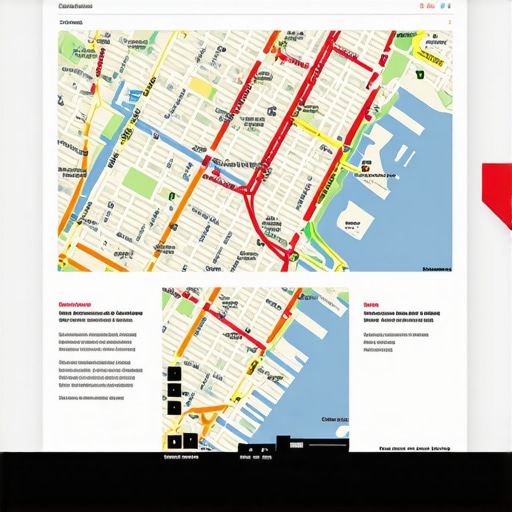
A “lazy embed” is a generic iframe that doesn’t provide context. For a business looking for Effective Local Business SEO Tactics for NYC Market Domination, relying on a basic iframe is like bringing a knife to a gunfight. Google’s crawlers are looking for deep integration between your website’s content and your physical location. When you simply drop an iframe, you aren’t providing the structured data or the interactive signals that prove you are an authority in your neighborhood. To truly compete, you need a comprehensive google business profile seo strategy that treats your map as a dynamic lead-generation tool, not a static image.
Furthermore, the 2026 algorithm update has placed a massive emphasis on how users interact with your local signals. If a user lands on your Manhattan service page and the map takes four seconds to load – or worse, provides no direct way to contact you – you’ve failed the “Experience” test. You aren’t just fighting other businesses; you’re fighting the “Manhattan Proximity Trap,” where Google favors the closest possible result unless your relevance signals are undeniably stronger.
Section 2: How “Lazy Embeds” Kill Your Core Web Vitals
Technical SEO is no longer a “nice-to-have”; it is the foundation of local rankings. One of the biggest mistakes NYC service businesses make is placing a heavy, unoptimized map embed “above the fold” on their mobile service pages. In the fast-paced environment of NYC, where potential customers are often searching while on a moving subway or walking through Times Square, speed is everything.
Standard Google Map iframes are notorious for being resource-heavy. They pull in multiple scripts, CSS files, and images that can significantly degrade your **Interaction to Next Paint (INP)** and **Largest Contentful Paint (LCP)**. As of 2026, the technical threshold for a high-ranking site requires an INP of less than 200ms. A standard iframe can easily push your INP well past 500ms, signaling to Google that your site is sluggish and unresponsive. This is where local seo tools become essential for monitoring and optimizing your site’s performance.
When a map loads slowly, it creates a “jank” effect where the page layout shifts as the map populates. This frustrates users and leads to a high bounce rate. If your “Upper West Side Plumber” page takes too long to load because of a bloated map, the user will bounce back to the search results and click on your competitor. Google tracks this “pogo-sticking” behavior and uses it to demote your ranking. To avoid this, you should be using lazy-loading techniques or, better yet, a static map image that only loads the interactive elements once a user clicks on it. This keeps your site lean and your INP scores within the green zone. For more on technical pitfalls, check out The Specific Schema Error That Keeps Your Shop Off the NYC Map.
Section 3: The “Map Stacking” Myth vs. 2026 Reality
If you’ve been shopping for “cheap” SEO packages, you’ve likely seen offers for “10,000 Map Embeds” or “Map Stacking Services.” These are classic black-hat tactics that worked in 2018 but are a fast track to a manual penalty in 2026. The logic behind map stacking was that by embedding your map on thousands of low-quality “web 2.0” sites, you would build “geo-authority.”
Today, Google’s AI-driven spam filters are incredibly adept at recognizing these patterns. A sudden influx of thousands of embeds from irrelevant, low-authority domains looks exactly like what it is: a manipulation attempt. Instead of building authority, you are creating a digital footprint of spam. Many agencies still peddling these services are using outdated playbooks. If you aren’t careful, you might find yourself reading 3 Red Flags Your Manhattan SEO Agency Is Using 2024 Tactics sooner than you think.
Moreover, the “New Google Maps Embed Code” introduced by Google is more restrictive. It often lacks direct phone links or clear CTAs within the iframe itself. Stacking these limited embeds provides zero value to the user and zero value to the search engine. The 2026 algorithm prioritizes quality over quantity. One well-optimized, high-performing map on a relevant, high-authority NYC service page is worth more than 100,000 spammy embeds on “junk” sites.
Section 4: Proximity vs. Relevance: The Manhattan Dilemma
In NYC, proximity is the ultimate ranking factor, but it is also a trap. This is what I call the “Manhattan Proximity Trap.” If your office is in Chelsea, Google naturally wants to show your business to people in Chelsea. But what if you want to rank for “Emergency Plumber Upper East Side”?
Simply embedding a map of your Chelsea office on your Upper East Side service page is a mistake. It tells Google (and the user) that you are far away. To break this trap, you need to focus on relevance over proximity. This requires a sophisticated google business profile optimization strategy. Instead of a generic pin of your office, you should embed a map that highlights your service area or uses specific geo-coordinates relevant to the neighborhood you are targeting.
One of the most effective ways to do this is by using **CID (Cluster ID) links**. A CID link is a unique identifier for your business on Google Maps. When you embed a map using the CID link rather than a search string, you are providing Google with a direct, unambiguous connection to your entity in the Knowledge Graph. This helps bridge the gap between where your office is located and where your services are needed. If you are struggling with this, you need to learn How to fix the Manhattan proximity trap that hides your business from local neighbors.
Section 5: The Authoritative Way to Embed (The “Right” Way)
So, how do you actually use map embeds to rank google business profile higher? It’s about creating a “Geo-Relevance Hub” on your service page. Follow this checklist to ensure your map is working for you, not against you:
- Use the CID Link: Never use a generic search URL for your embed. Find your CID (Cluster ID) and use that to generate your embed code. This reinforces your entity authority.
- Implement Local Business Schema: Your map shouldn’t exist in a vacuum. Use JSON-LD LocalBusiness schema to link your website, your NAP (Name, Address, Phone), and your Google Maps URL together. This creates a “triple-check” for Google’s crawlers.
- NAP Consistency: Ensure that the Name, Address, and Phone number displayed next to the map on your website matches your Google Business Profile exactly. Even a missing suite number can cause friction in the algorithm.
- Add a “Get Driving Directions” Link: Engagement is a massive ranking signal. By adding a clear, high-contrast button that says “Get Driving Directions to our [Neighborhood] Office,” you are encouraging a high-value interaction that tells Google your business is a destination. This is a key component of a google maps ranking service strategy.
- Optimize for Mobile UX: Use a placeholder image for the map on mobile devices. When the user clicks “View Map,” the interactive iframe loads. This keeps your INP low and your user experience high.
By following these steps, you aren’t just “putting a map on a page.” You are building a technical bridge between your website and the Google Maps ecosystem. For a deeper dive into these technicalities, see NYC Maps Ranking Secrets Revealed: Boost Your Business Today. When you focus on these details, you are performing google maps seo at a level that 99% of your NYC competitors are ignoring.
Section 6: Conclusion & The 2026 Outlook
The days of “set it and forget it” local SEO are over. In the 2026 NYC market, your digital presence must be as fast, precise, and authoritative as the city itself. A lazy map embed is a signal to Google that you aren’t serious about your user’s experience or your own technical health. By optimizing your embeds for Core Web Vitals, utilizing CID links, and avoiding the spammy “map stacking” tactics of the past, you position your business to dominate the Manhattan and Brooklyn map packs.
As we look forward, the integration between AI search (SGE) and local maps will only tighten. Your ability to provide clear, structured, and fast-loading geographic data will be the deciding factor in whether you appear in the “AI Overviews” for local services. Don’t wait for your rankings to drop before you take action. Audit your service pages today. Use a google business profile audit tool to see where your technical gaps are and start implementing a strategy that actually moves the needle.
Stay ahead of the curve by staying informed on Google Business Profile Tips 2026: What Actually Matters for the Next Update. The “Manhattan Proximity Trap” is only a trap if you don’t have the right map to navigate it. Optimize your embeds, respect the algorithm, and watch your local leads grow.