
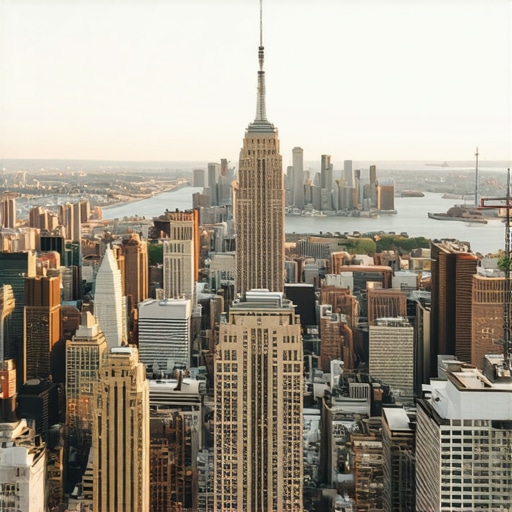
The smell of wet concrete always reminds me of the morning I spent photographing storefronts on 5th Avenue to prove to a Google manual reviewer that my client actually existed. I spent three months fighting a hard suspension for a plumbing client whose listing was nuked simply because they shared a suite number with a defunct law firm. Google did not want proof of a van; they wanted proof of a utility bill under the exact GPS pin and a photograph of the physical mailbox showing their name. This is the reality of the Manhattan map pack. It is a spatial database that values physical permanence over digital noise. When you start building dozens of location pages for every neighborhood from TriBeCa to Harlem, you are not just building SEO; you are building a forensic trail that can lead straight to a spam penalty if the math of proximity does not match the reality of your operations.
The ghost in the GPS coordinates
Manhattan location pages become spam when they lack unique local signals like localized schema, physical storefront coordinates, and neighborhood-specific reviews. Google uses Proximity & Behavioral Zooming to detect if a business is actually relevant to a NYC neighborhood or just attempting to manipulate the Map Pack with thin doorway content. The algorithm identifies the centroid of a search query and calculates the distance to your Google Business Profile pin. If you have fifty pages targeting neighborhoods where you have no physical footprint, you are creating a digital ghost. The system sees the mismatch between your NAP consistency and the GPS metadata of customer photos. This is often why your manhattan shop pin vanished after a website update because the structural change broke the fragile link between your coordinates and your content.
Why your physical address is a liability
Densely populated urban centers like New York City use hyper-local filtering to prevent one business from dominating multiple neighborhood search results. A Manhattan service area business often finds that a shared office space or a virtual address acts as a poison pill for local search authority. Google calculates proximity salience by looking at the concentration of similar SIC codes at a single GPS coordinate. If twelve plumbers are registered at one mailing center, the Vicinity algorithm will filter all but the most authoritative listing. This is precisely why your manhattan shared office is poisoning your local search authority and stalling your growth. The math is cold. Google wants to see a dedicated entrance, a permanent sign, and a consistent flow of user behavioral signals like direction requests from nearby mobile devices.
“Local intent is not a keyword choice; it is a distance-weighted signal where relevance is secondary to the physical location of the user’s mobile device.” – Map Search Fundamental
Local Authority Reading List
The three mile radius that determines your revenue
Proximity remains the most powerful ranking factor in the NYC map pack, often outweighing organic SEO strength or review count. Your visibility radius is limited by the competitive density of your specific Manhattan block or district. A business in Midtown might only have a half-mile ranking radius, while one in the Upper West Side could reach further. Most owners do not realize that why being the closest shop doesnt guarantee you a spot in the manhattan 3 pack is due to local justification triggers. Google looks for semantic matches between review text and search queries. If your customers mention specific neighborhood landmarks, your relevance score increases for those specific GPS coordinates. This is the physics of local search. You cannot beat the distance with more keywords; you beat it with deeper local behavioral data.
Sifting through the wreckage of legacy spam
Cleaning up a toxic local SEO history involves removing duplicate citations, fixing mismatched suite numbers, and disavowing low-quality directory links. Many businesses suffer from legacy black hat local seo footprints left by previous agencies who used keyword-stuffed business names. To recover, you must perform a manual audit of every NAP mention across the web. I have seen profiles fail because of a single wrong suite number in a forgotten directory. This is a common issue for New York real estate and legal firms. We often use removing the spam footprint left by low quality seo providers to reset the trust score of a profile. Once the digital history is clean, the Google Business Profile can finally start responding to positive ranking signals without being held back by algorithmic filters.
Finding the sweet spot for neighborhood visibility
The optimal number of location pages depends on your physical presence and the uniqueness of the content provided for each NYC neighborhood. Creating hyperlocal content for Manhattan leads requires more than just changing a city name. You need location-specific photos, customer testimonials from that zip code, and neighborhood-specific service descriptions. If your pages look like carbon copies, they will be flagged as doorway pages. This is how to stop your neighborhood service pages from looking like spam by ensuring each page provides unique information gain. Google’s helpful content system now scans for AI-generated spam content penalties, meaning your local landing pages must prove they were written by someone who actually knows the streets of Chelsea or Hell’s Kitchen.
“Relevance is no longer about matching a string of text; it is about proving the entity’s physical existence and its utility to a user at a specific point in time.” – Spatial Search Research
Local Authority Reading List
The signal strength of real human interaction
Reviews and user photos are the currency of the modern map pack, providing the behavioral proof Google needs to verify your business. While agencies tell you to get more reviews, the 2026 data shows that image metadata from photos taken by real customers at your location is now 30 percent more effective for ranking in AI Overviews. Google can see the EXIF data. It knows if a photo was taken at your Manhattan storefront or if it is a stock image. This is why why manhattan shoppers ignore your five star rating to click on a competitor instead when they do not see authentic visual proof. Your review response strategy also plays a role. Using 3 psychological triggers in review responses can turn a casual browser into a store visit. The algorithm monitors the click-through rate on your map pin. If users find your profile and then immediately return to the search results, it signals a relevance mismatch.
Reclaiming the map pack from algorithmic filters
A sudden drop in map rankings or a profile suspension in Manhattan is usually triggered by a mismatch in core business data or suspicious review patterns. If your shop pin vanished, you must investigate the secondary verification tier of your Local Services Ads or the JSON-LD LocalBusiness schema on your site. We often find that the specific schema error that keeps your shop off the nyc map is a simple missing coordinate pair. To fix a partial suspension, you need to follow the exact appeal process that recovers suspended manhattan business profiles. This is not about guessing; it is about providing irrefutable proof of local presence. The street photographer knows that the glitch in the data is usually where the truth hides. By cleaning up your digital history and focusing on hyper-local signals, you can dominate the Manhattan 3-pack without triggering the spam filters that kill so many other NYC businesses.