
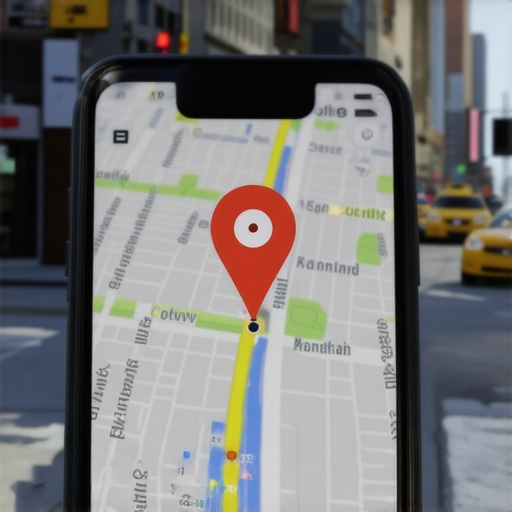
The technical disconnect between digital code and physical concrete
I spent three months fighting a hard suspension for a plumbing client whose listing was nuked simply because they shared a suite number with a defunct law firm. Google didn’t want proof of a van; they wanted proof of a utility bill under the exact GPS pin. This is the reality of the hyper-local layer. When you update a website, you are not just changing pixels. You are altering the authoritative data source that Google uses to verify your physical coordinates. A single broken redirect or a change in the NAP (Name, Address, Phone) structure can trigger a proximity mismatch, causing your shop pin to vanish from the Map Pack instantly.
The ghost in the GPS coordinates
A vanishing shop pin occurs when Google Business Profile triggers a re-verification loop due to technical website errors like 404 pages or mismatched Schema markup. The algorithm views your website URL as the primary anchor for local relevance. If that anchor moves or breaks, the GPS salience of your business location is compromised. The pin moved. The trust broke. I have seen Manhattan storefronts lose everything because their SEO services failed to map out broken redirects during a migration. When a user clicks a map pin and hits a dead link, Google marks that node as a dead business. It is a dispatch failure. You are essentially telling the local algorithm that your store no longer exists at that latitude and longitude. To fix this, you must audit your digital history and ensure that every legacy URL points to a live location page with correct JSON-LD data. This is why how to clean up your digital history and rank better in Manhattan is a required step for any shop owner who has recently changed their site. The system hates a vacuum. It fills it with competitors.
“Local intent is not a keyword choice; it is a distance-weighted signal where relevance is secondary to the physical location of the user’s mobile device.” – Map Search Fundamental
Why your physical address is a liability
Hiding a business address or changing a suite number without updating local citations creates a data conflict that forces Google to suppress your impressions. The Map Pack is a spatial database. It relies on third-party consistency to prove that you are not map spam. If your website update included an over-aggressive location page strategy, you might have triggered a spam filter. I often see agencies build dozens of doorway pages for every neighborhood in Manhattan. This backfires. Google sees a service area that does not match the verified physical location. You need the truth about city specific landing pages and google penalties before you launch a new site. The logistics of your service area polygon must be precise. If you are a plumber in Chelsea, do not try to tell the algorithm you are also in Harlem without a physical anchor. The system tracks the flow of your workers. It knows your travel time. When the data does not align, the pin vanishes. This is the proximity trap.
The three mile radius that determines your revenue
Local search rankings are governed by a three-mile proximity radius where user location is the most critical ranking signal. Even with a perfect website, if your load speed is slow, you will lose the Map Pack battle. Technical issues like slow TTFB (Time to First Byte) or broken JavaScript prevent Google from crawling your local signals. You should look into 3 software features essential for tracking New York map rank to see how your visibility fluctuates block by block. A shop on 5th Avenue might rank at the top of the street but disappear three blocks away. This centroid collapse is often caused by a mismatched phone number in a secondary directory tier. I have found that why one wrong suite number in a directory stops your phone from ringing is the number one reason for ranking loss after a site update. The algorithm is looking for a perfect match. It is a dispatch system. It will not send a customer to a location it cannot 100 percent verify. Your website code must be the verification loop. Use Schema.org to hard-code your coordinates into the HTML header. This provides a high-trust signal that overcomes algorithm shifts.
Local Authority Reading List
- Recovering a suspended Manhattan shop pin
- Fixing the duplicate listing mess
- The best GMB ranking tools for local SEO
- Avoiding the website migration trap
- The real reason your pin won’t show for neighbors
Forensic traces of a service area polygon
Service area businesses (SABs) face a higher verification burden because they lack a public storefront, requiring strong digital signals to maintain map visibility. If you hide your address to protect your privacy, you must compensate with geo-tagged photos and hyper-local content. Many contractors fail because their neighborhood landing pages look like spam. You need to understand how to stop your neighborhood service pages from looking like spam to avoid manual penalties. The local algorithm analyzes the semantic distance between your business category and your content. If you are an HVAC company but your website only talks about general SEO, the linkage breaks. The behavioral zooming of the algorithm looks at how long a customer stays on your site after clicking the map pin. If they bounce because of a slow website, your proximity weight decreases. It is a negative feedback loop. I recommend using GMB ranking toolkits to monitor these behavioral signals in real-time. Do not guess. Track the data flow. You can find more on this via downloading the right data to win the New York maps war.
“Proximity is the strongest filter in local search; a business with 100 reviews will often lose to a business with 10 reviews if the latter is 500 feet closer to the searcher.” – Local Search Intelligence Report
Broken redirects and the math of local trust
Broken redirects destroy the equity of your backlink profile, which is the engine that drives your Manhattan map rankings. When you launch a new site, you must map every old URL to its new counterpart. Failure to do so leads to a 404 error for the Googlebot. This causes an immediate drop in impressions. Many owners think they can just hide their address to fix a ranking loss, but this often makes it worse. You need SEO services to recover impressions after hiding business address because the re-verification process is adversarial. Google will ask for video proof of your tools, equipment, and branded vehicle. If you cannot provide it, the pin stays dead. I have managed cases where a shared office space was poisoning local search authority for five different companies. You should read about why your Manhattan shared office is poisoning your local search authority before you sign a lease. The physical logistics of your office are just as important as your code. One mismatched suite number can stop your phone from ringing for months. It is a clog in the system. You need a manual audit to find these ghost errors. Automated GMB tools often miss the suite number mismatch because they only look at the main address. This is why the manual audit checklist that finds more errors than software is your best defense. Keep your data clean. Keep your pin live.